At different times I have photographed ruby-throated hummingbirds (Archilochus colubris) and hummingbird clearwing (Hemaris thysbe) moths, but on August 9 was the first time I’ve photographed the two types of hummer together.
The first to come along was a ruby-throated hummingbird (either a female or an immature male, both lacking ruby throats), who was content to do hummingbird things, such as feeding at a butterfly bush.
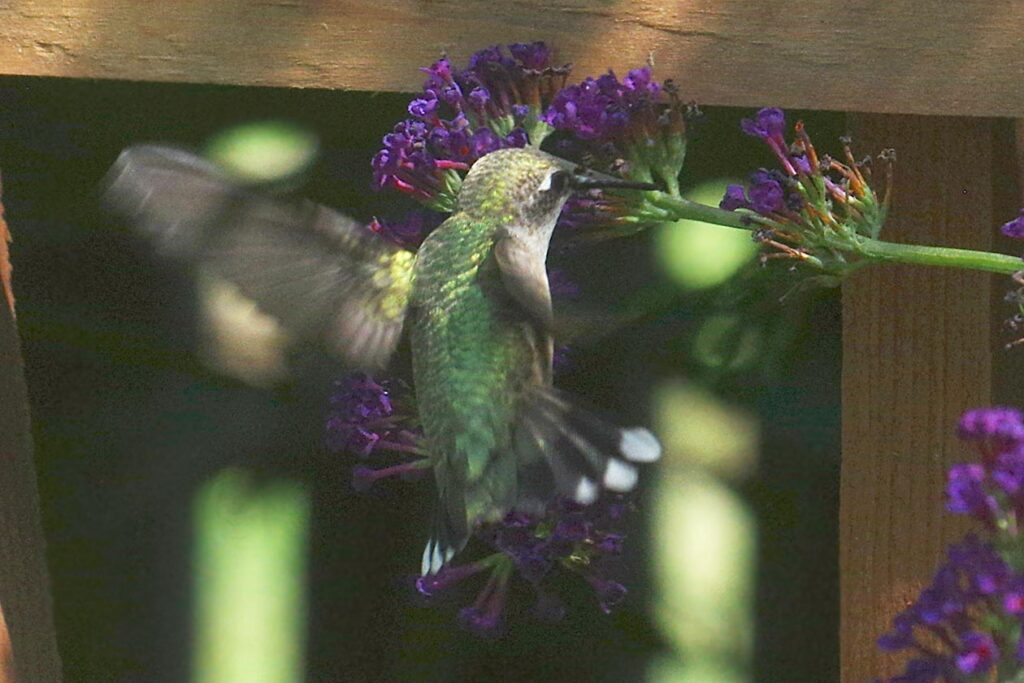
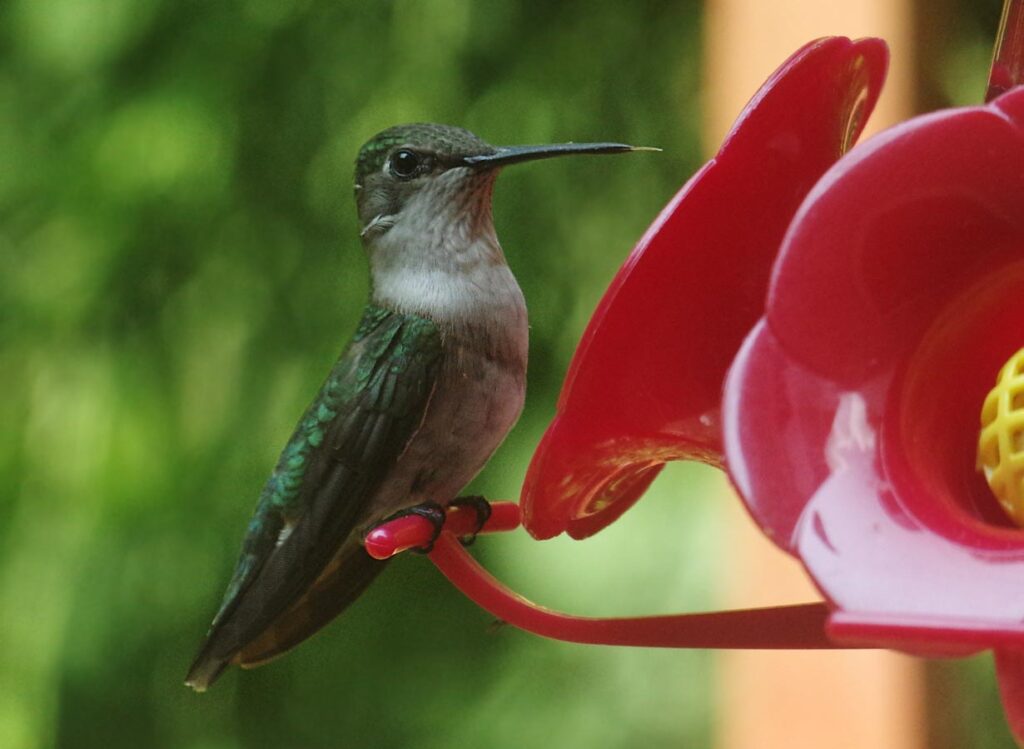
In between sips at the butterfly bush, the hummer also took turns at my hummingbird feeder.
However, to the hummingbird’s shock, a hummingbird moth arrived. The arrival totally ruined the ruby-throated hummingbird’s day.
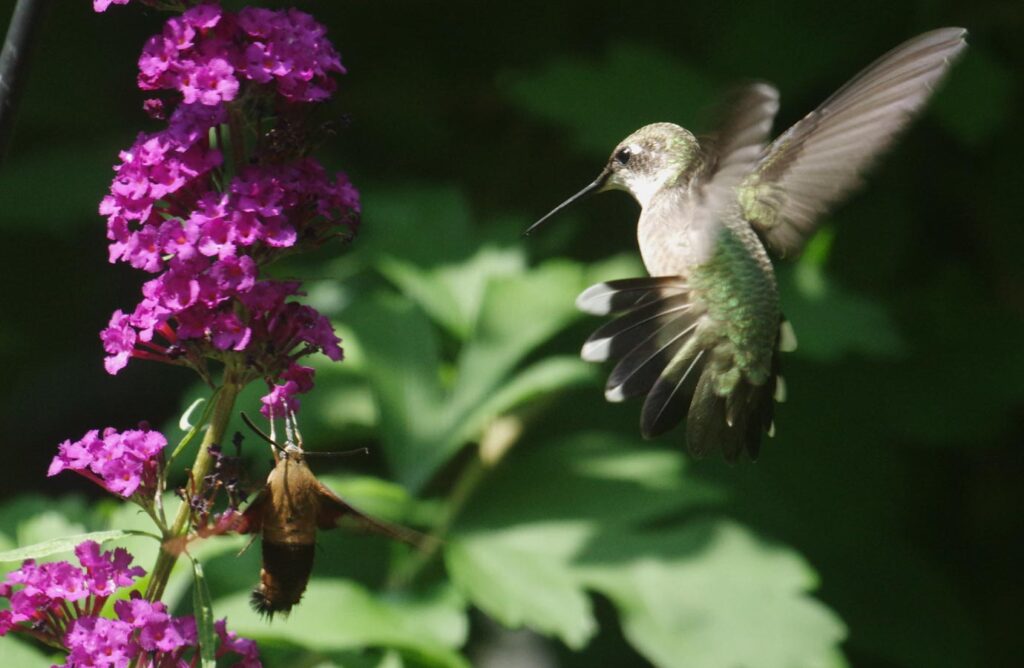
The hummingbird did everything possible, outside of an outright attack, to eliminate competition by driving the moth away.
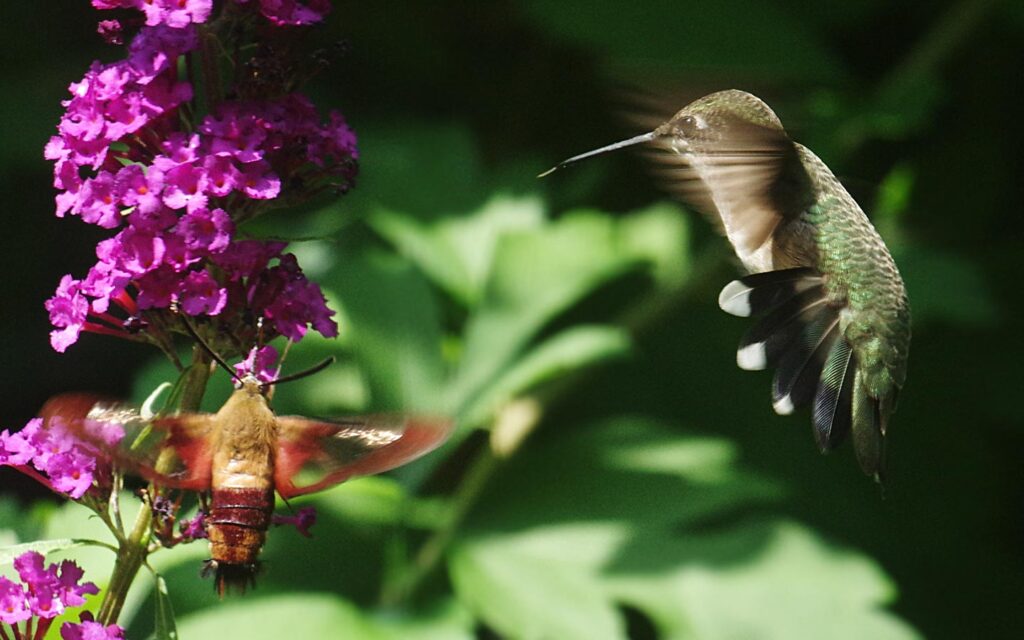
Nothing worked.
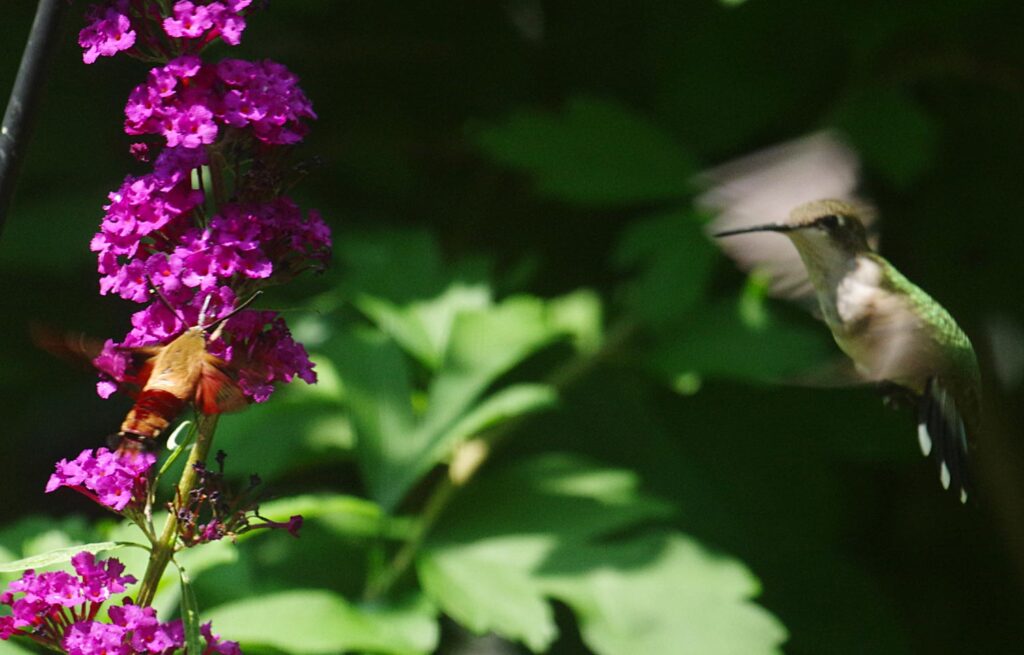
Just when I thought the hummingbird would give up, it reacted more drastically (but without physical violence). I suppose one could say the next photo shows a hummingbird yelling a remarkable curse.
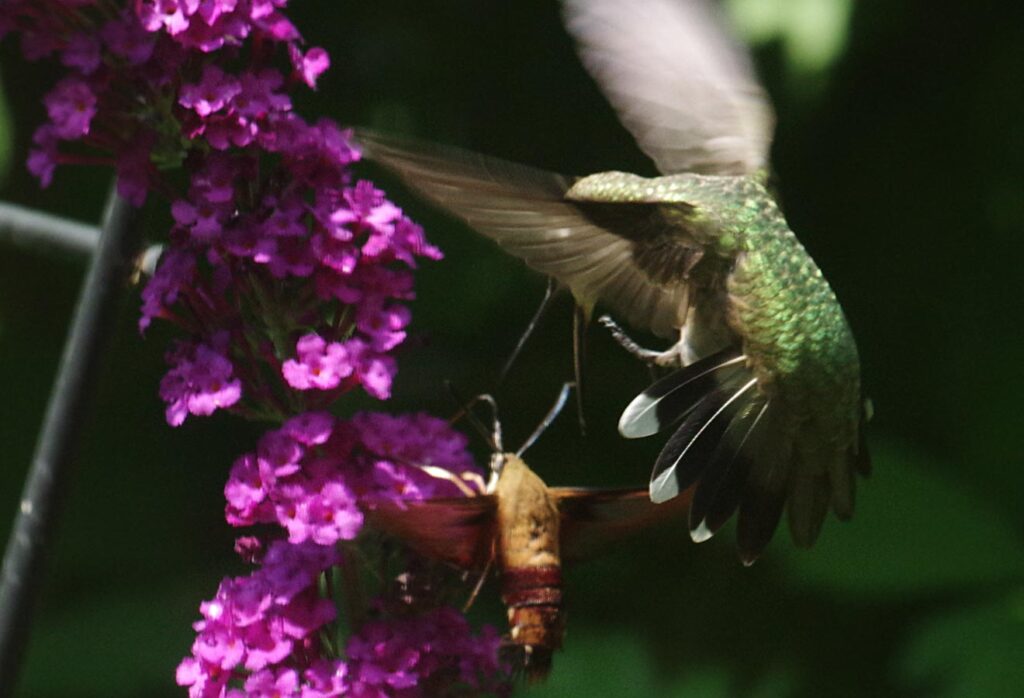
Cursing didn’t drive away the hummingbird moth, but the hummingbird continued its reign of flapping or humming terror.
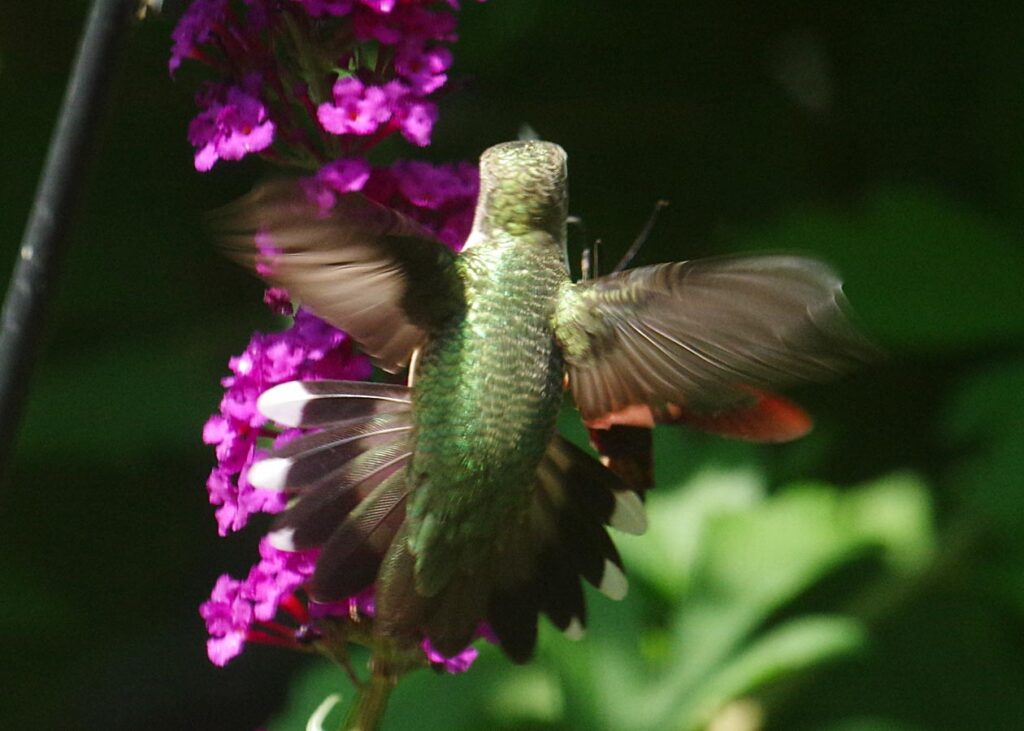
Eventually, the hummingbird left and the hummingbird moth remained, so I switched from a telephoto lens to a macro lens to take a few closeups of the moth. Shortly after I went outside, the hummingbird returned, making an interesting background to the photo below.
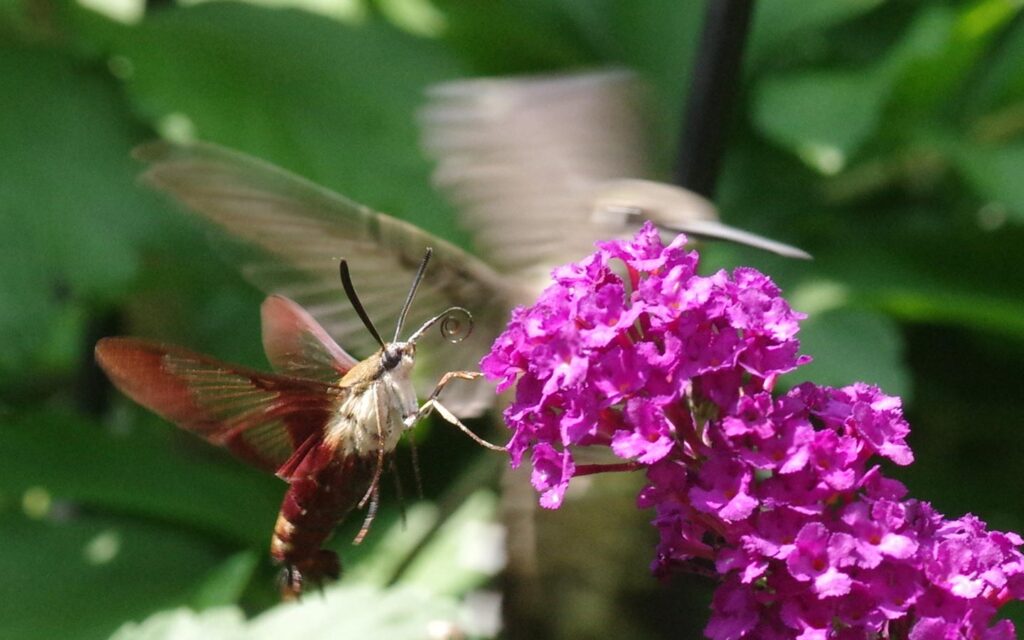
Who would think of a ruby-throated hummingbird as a giant predator?
When hummingbird finally left (and typically a hummer doesn’t hang around if I’m near its feeding area), I photographed the hummingbird moth alone.
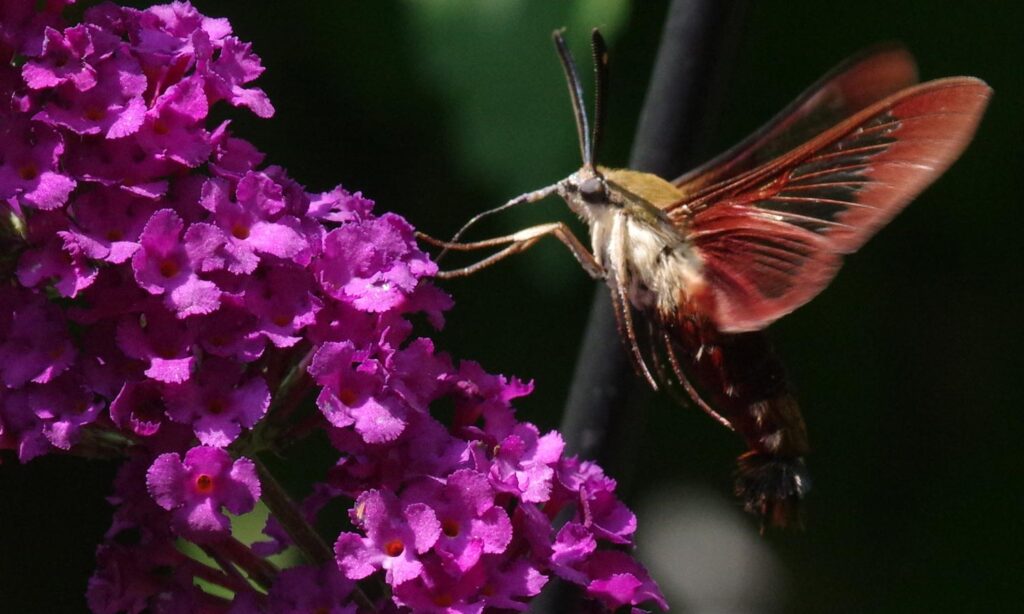
A hummingbird moth has red wings and white legs.
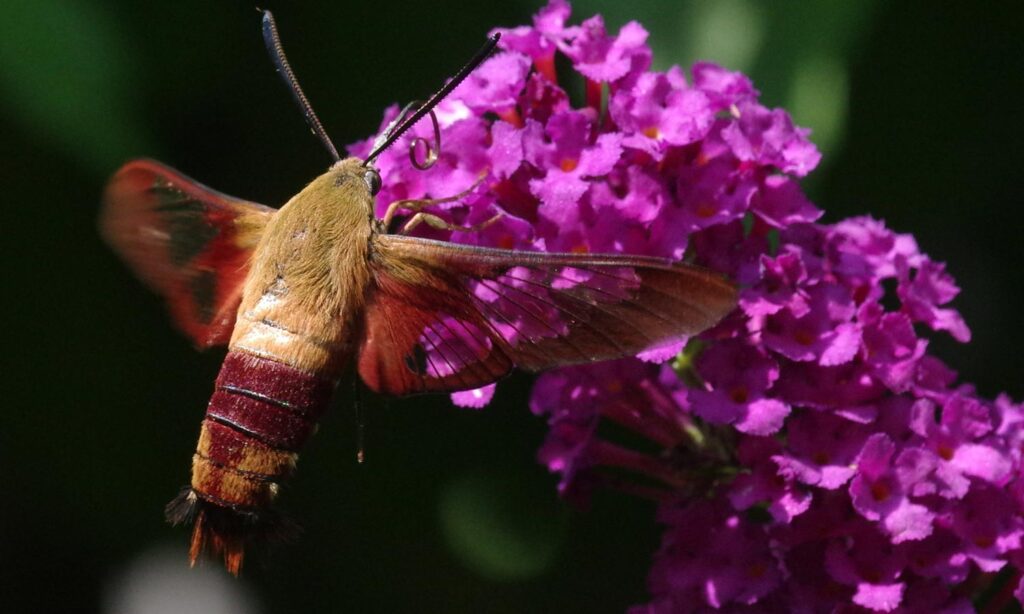
The moth also has a red cummerbund (or a broad red belt), so to say.
All hummers are incredible, whether bird or moth.