Making 2026 remarkable is not only the number of red squirrels but also the appearance (and disappearance) of white-tail red squirrels.
By early spring, I expected to see more than the usual number of red squirrels because two pregnant red squirrels moms were sharing space here.
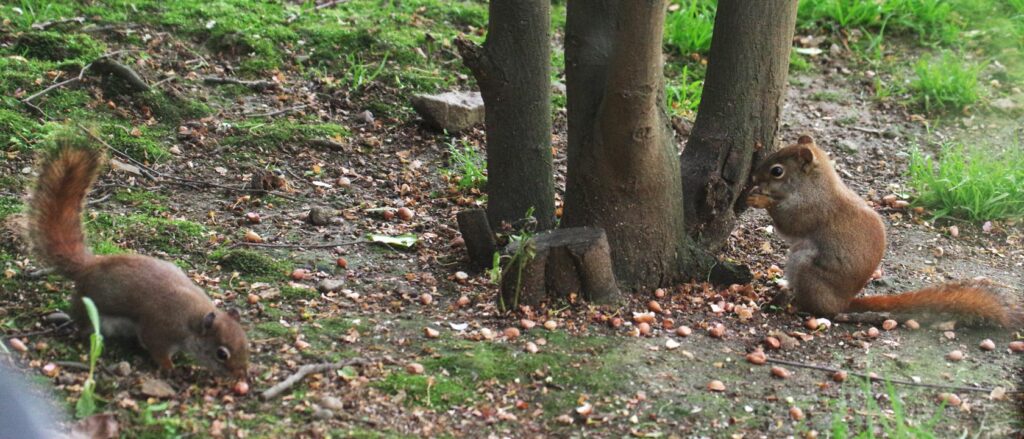
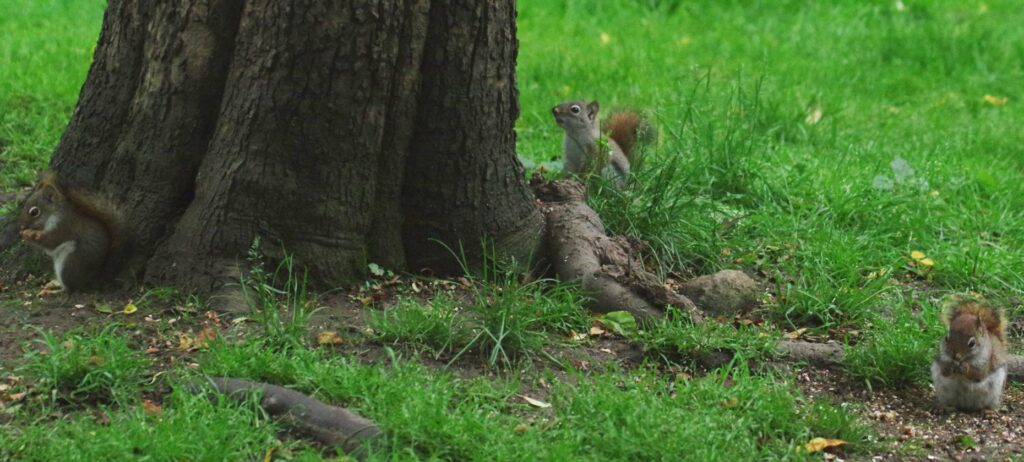
As expected, a fair number of young red squirrels were soon on the scene. Whereas adult red squirrels prefer not to associate with one another, the young ones will hang out together, along with a parent now and again.
Then came the total surprise. On July 4, Sue spotted an unusual animal in the distance, which turned out to be a red squirrel with a white tail. I grabbed a camera and managed to take a few photos before the red left.
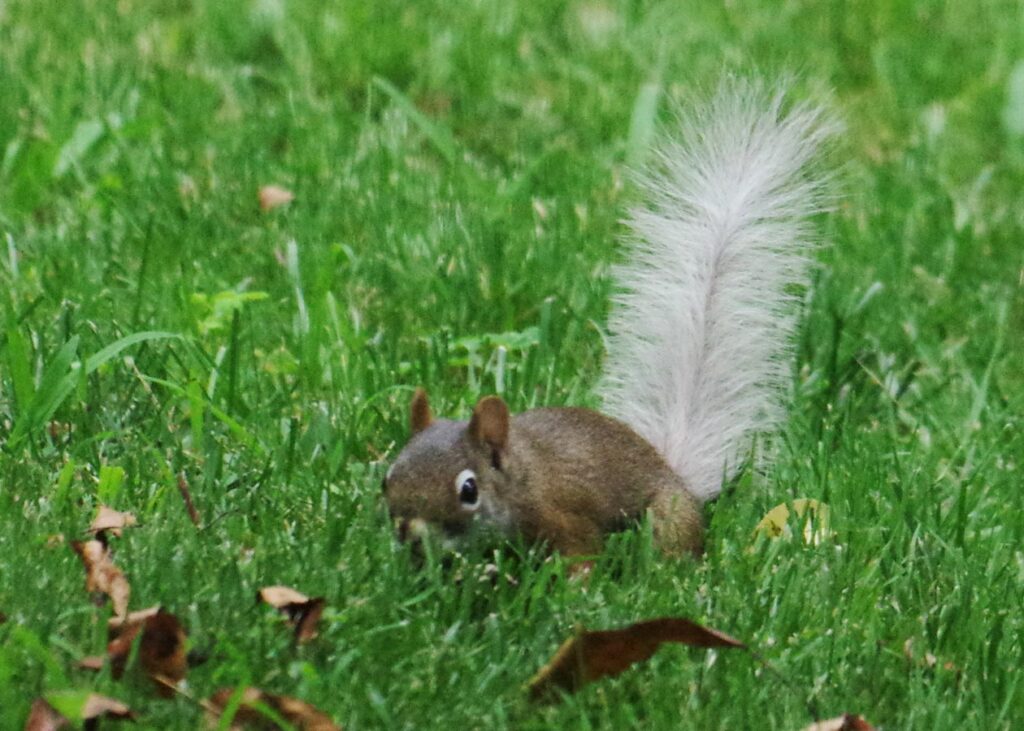
Talk about standing out! I have another photo of the white-tail in front of the main tree here, by which the red appeared thoroughly at home.
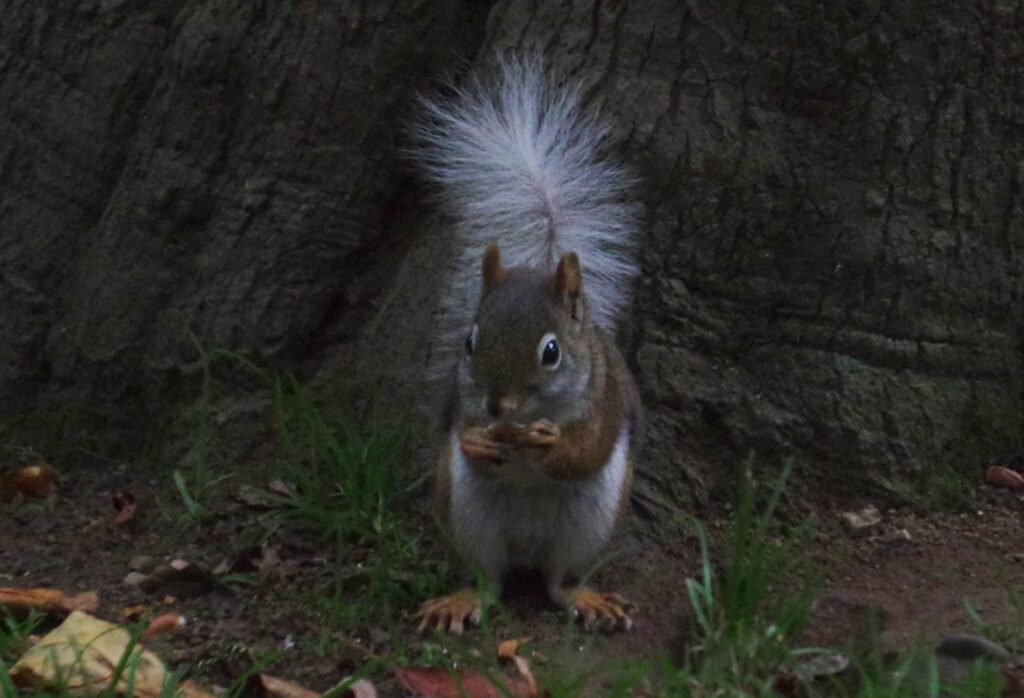
After the white-tail red left, Sue and I wondered whether we’d ever see it again. The next day, the white-tail red returned and displayed both its right side . . .
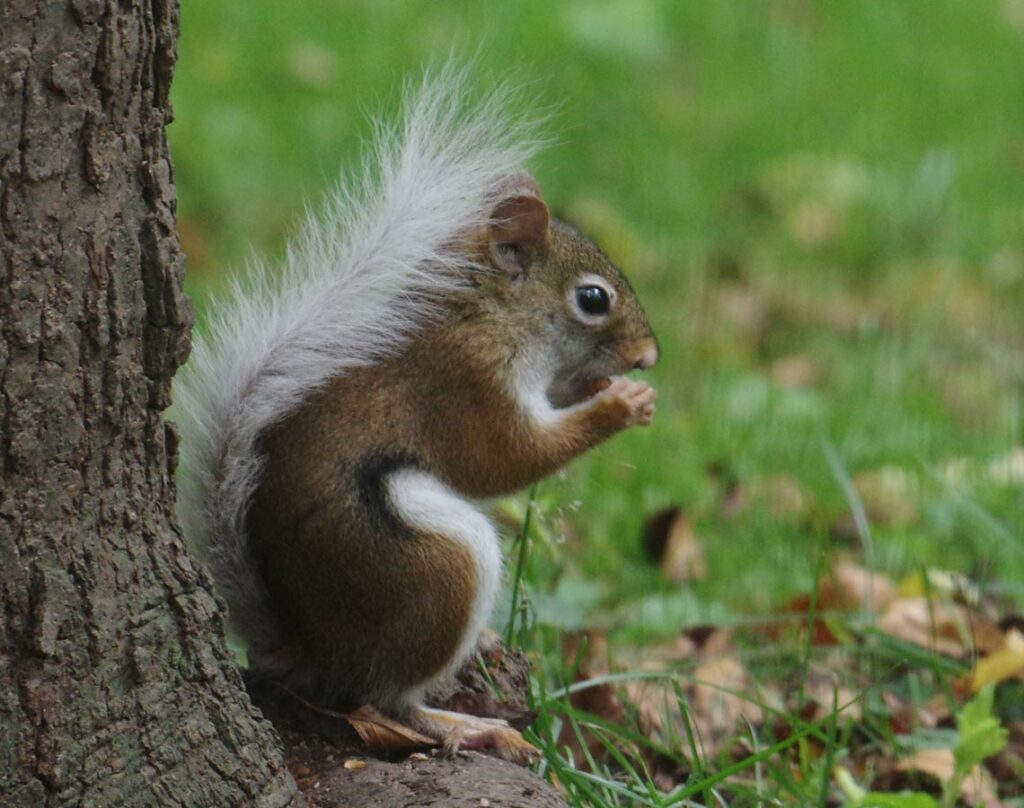
and left side.
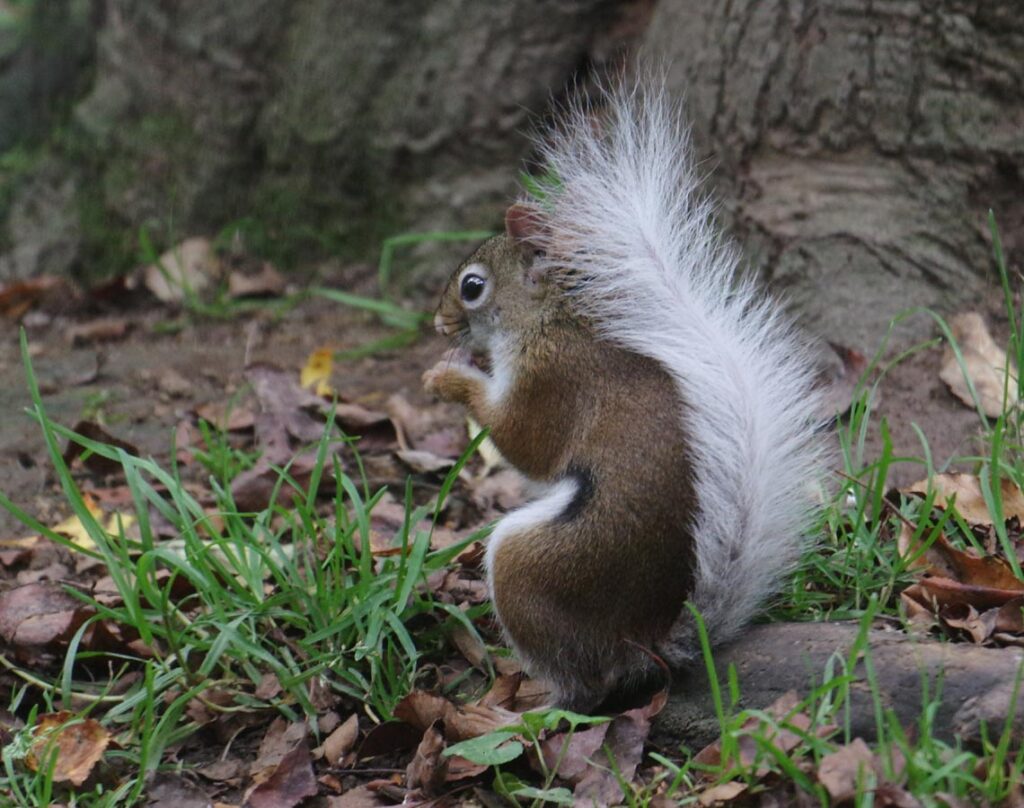
And then the surprises continued because a second white-tail red squirrel came running in.
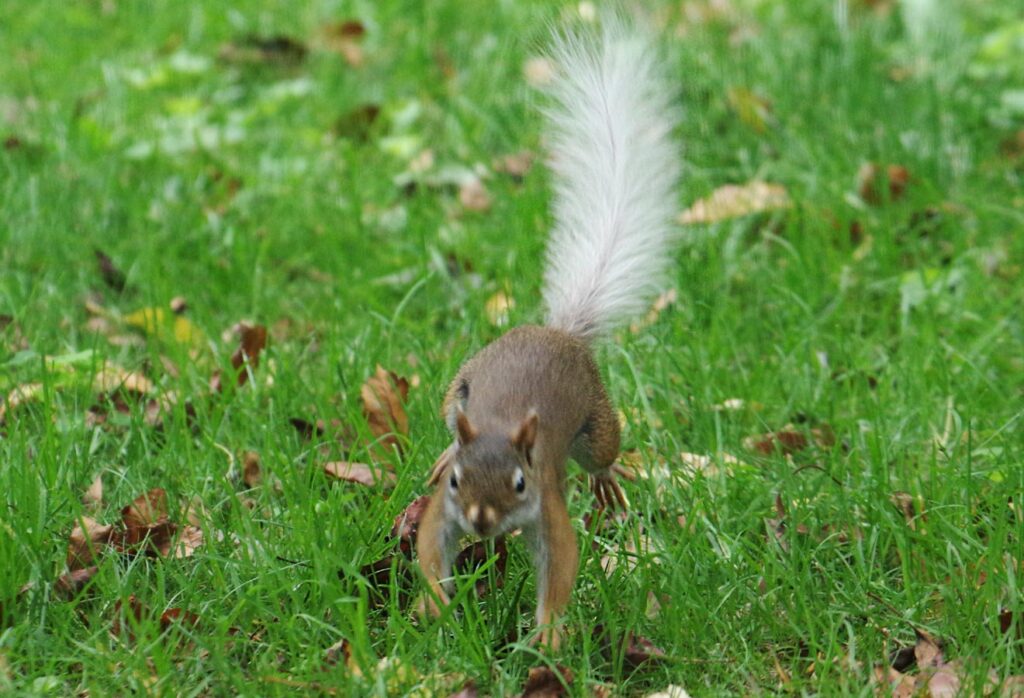
The second white-tail quickly settled in . . .
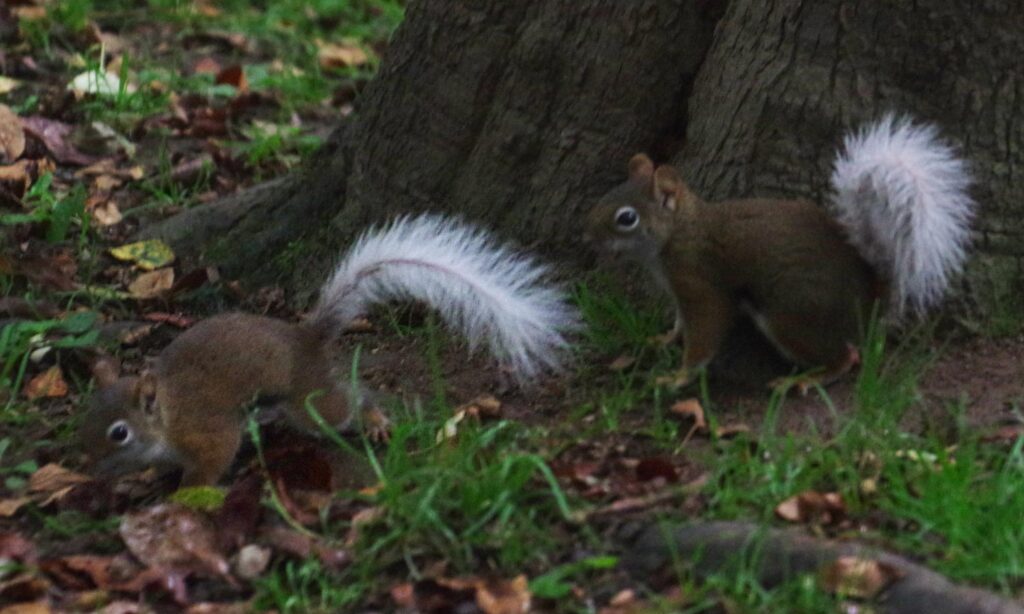
and was content to eat side by side with the first white-tail red.
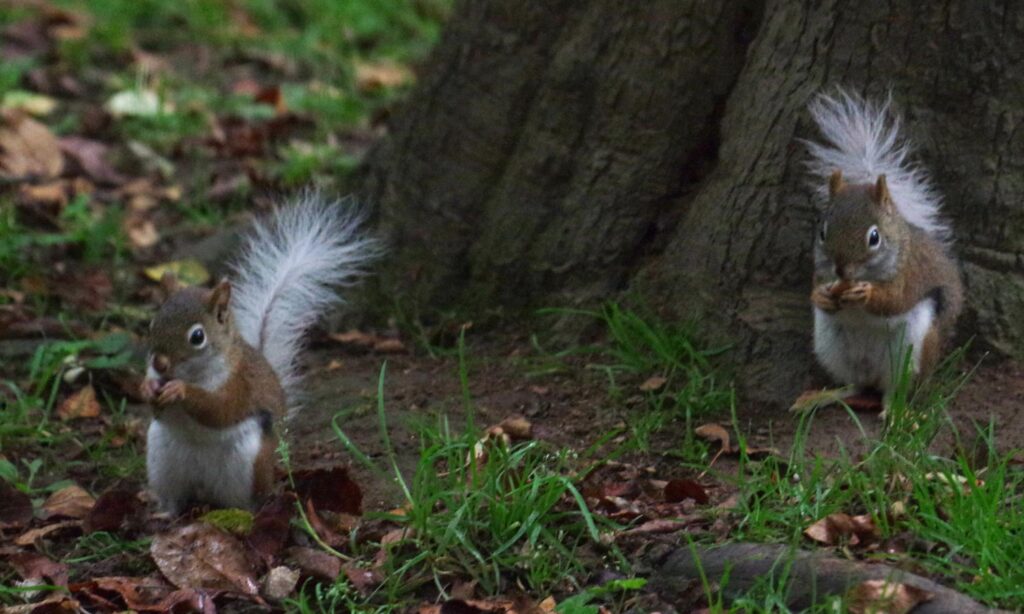
As the days passed, the other animals accepted the white-tail reds as part of the greater family, such as a white-tail and a gray squirrel.
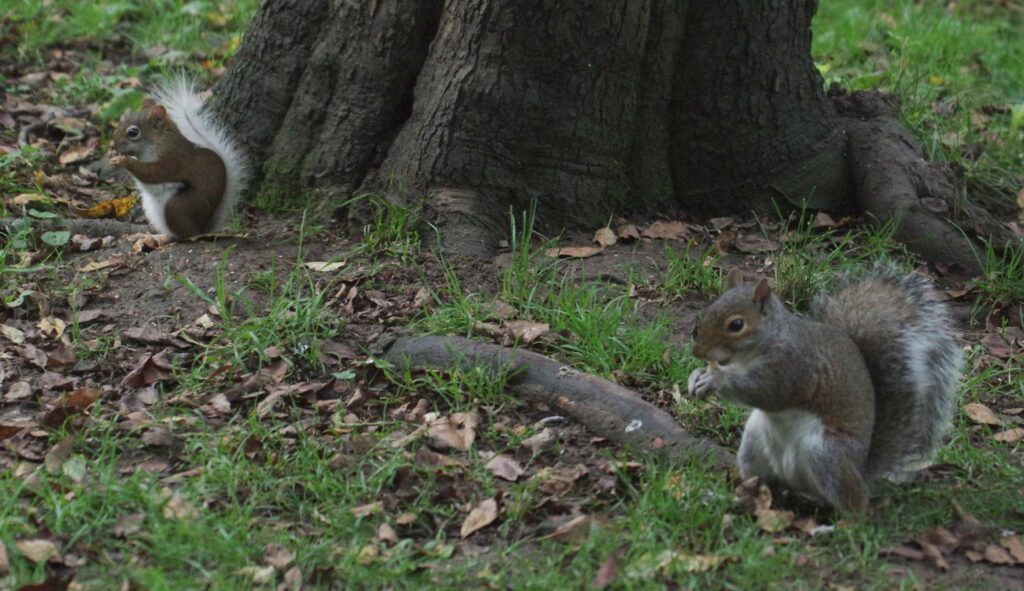
Admittedly, the red squirrel in following photo appears perplexed about the white-tail red.
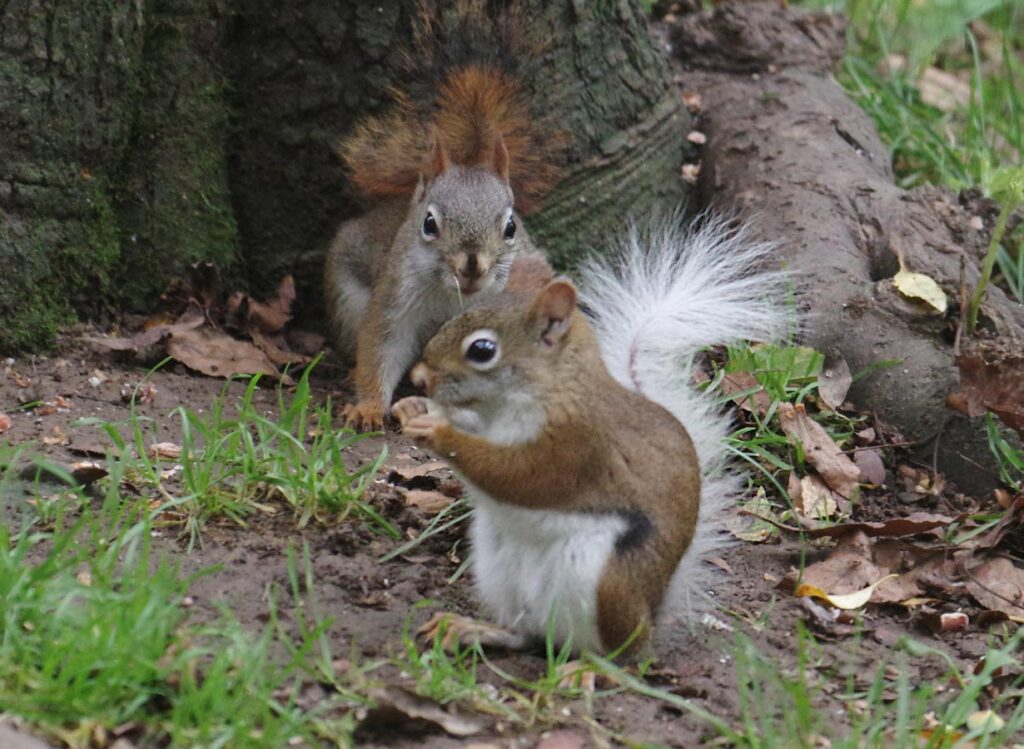
The white-tail reds and regular reds freely associated with one another.
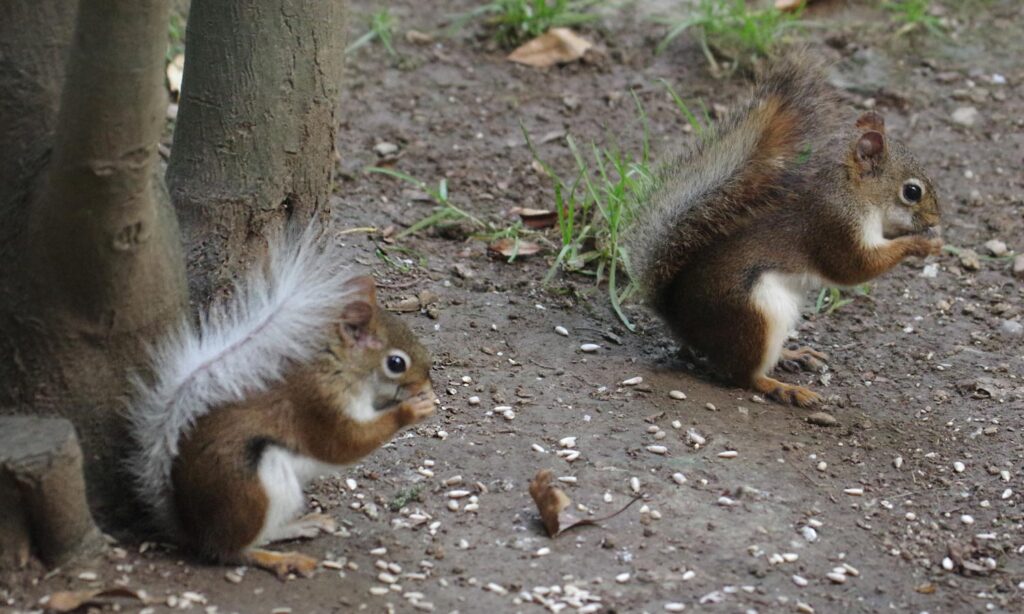
Of course, a white tail requires extra grooming.
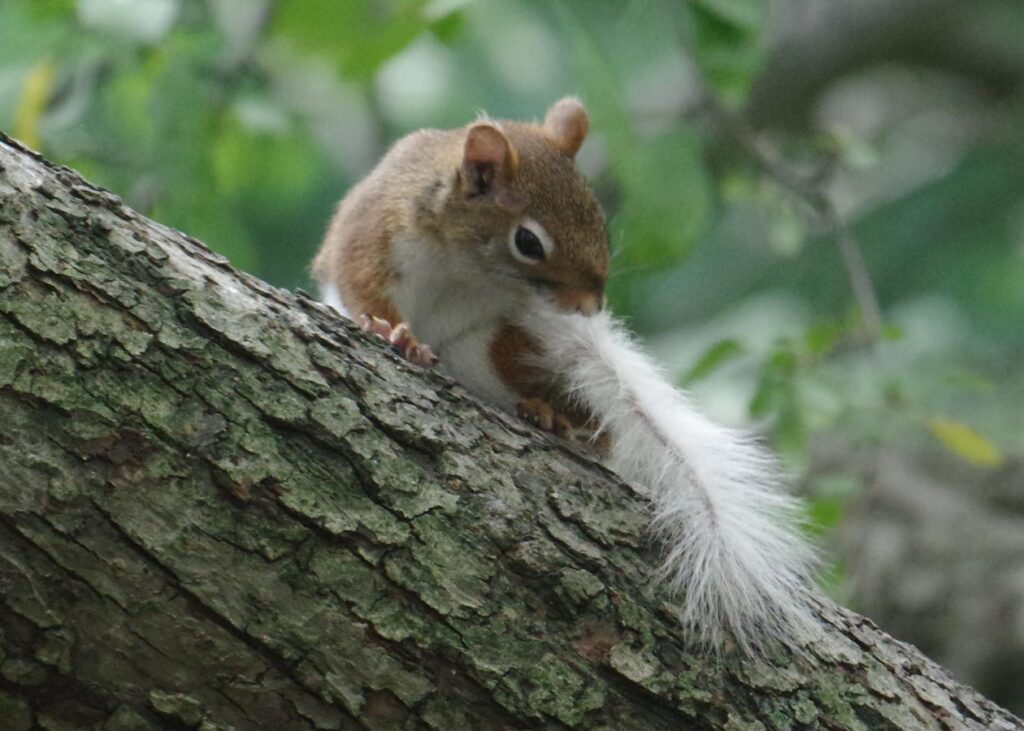
The white-tails had become welcome regulars.
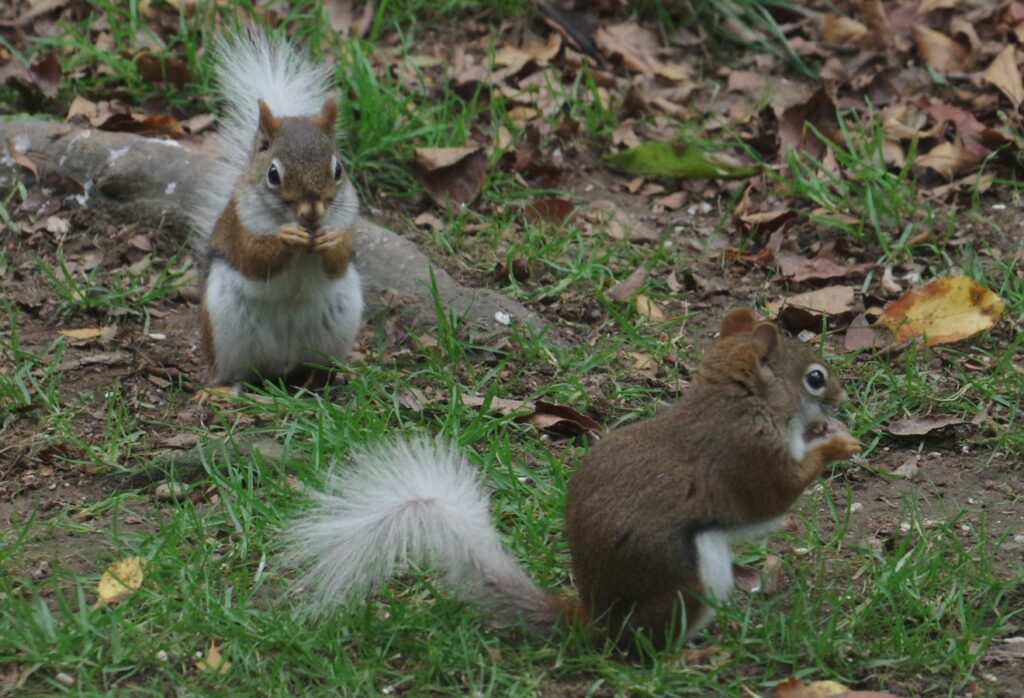
Having two white-tails in one photo became common.
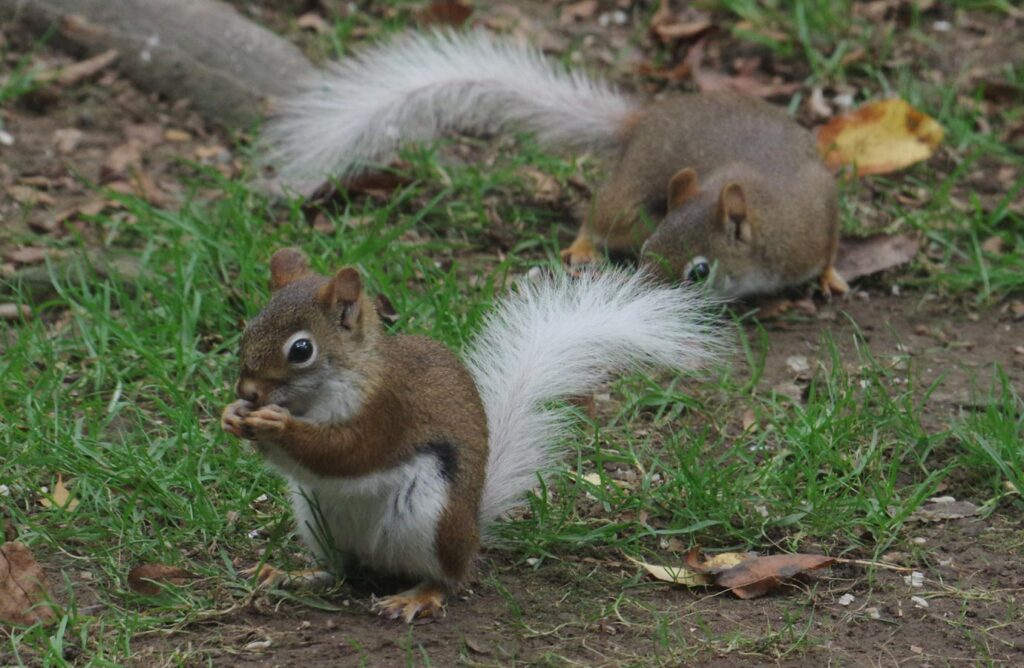
By mid-July Sue and I were positive there were more than two white-tails. For example, while I was photographing a group of two, a third white-tail was somewhat shy and stayed a moderate distance away.
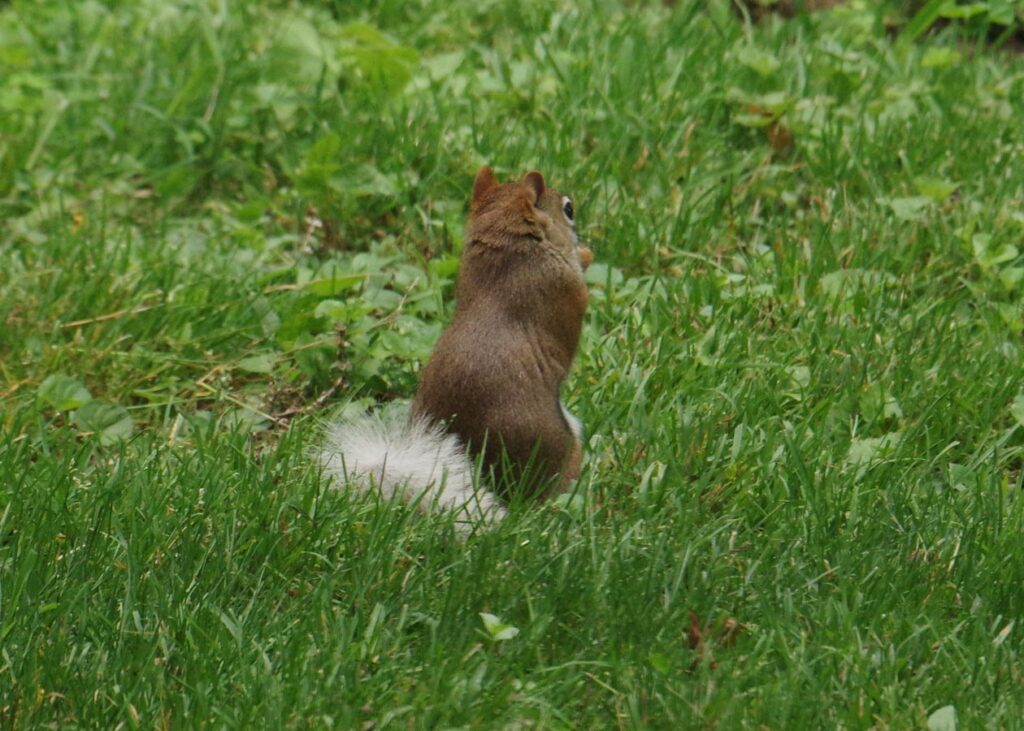
Sue had counted as many as four different white-tail reds. It was curious, to say the least. Why now? I reached out to our local wildlife rehabber Robyn Graboski and asked her about the situation. It turned out that her organization, Centre Wildlife Care, fostered and released four white-tail reds in the nearby game land. Perhaps with all the other red squirrels coming by, the white-tails followed and made their way to our area.
In the beginning of August, changes were occurring.
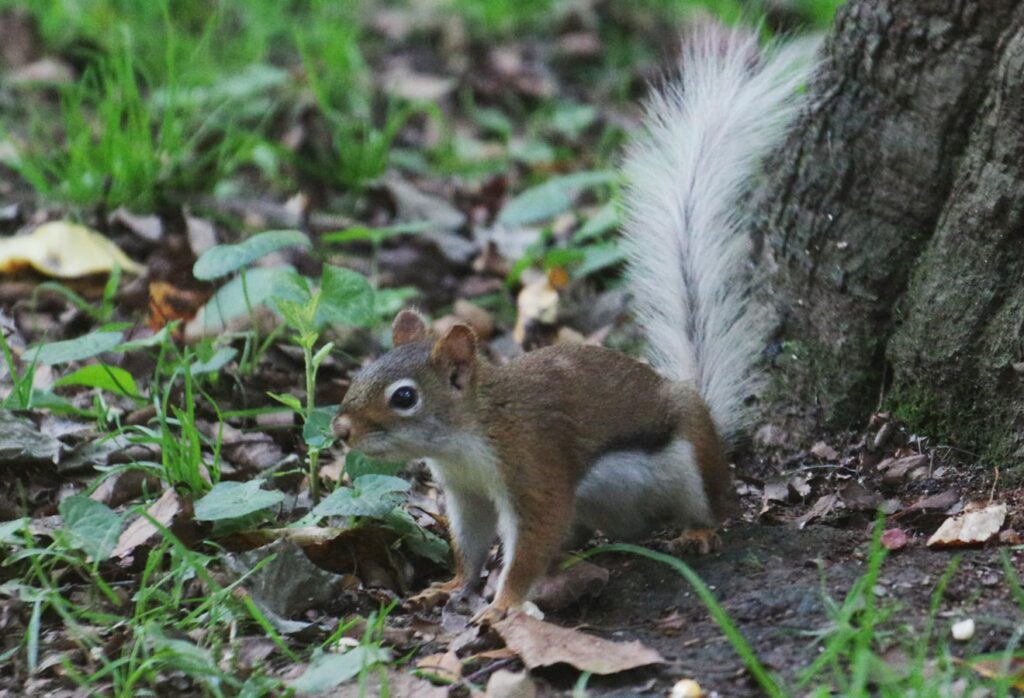
Note in the photo above how the center spine of the tail is dark. Well, the center was always a tad darker, but it began to become more so.
The second change is seen in the following.
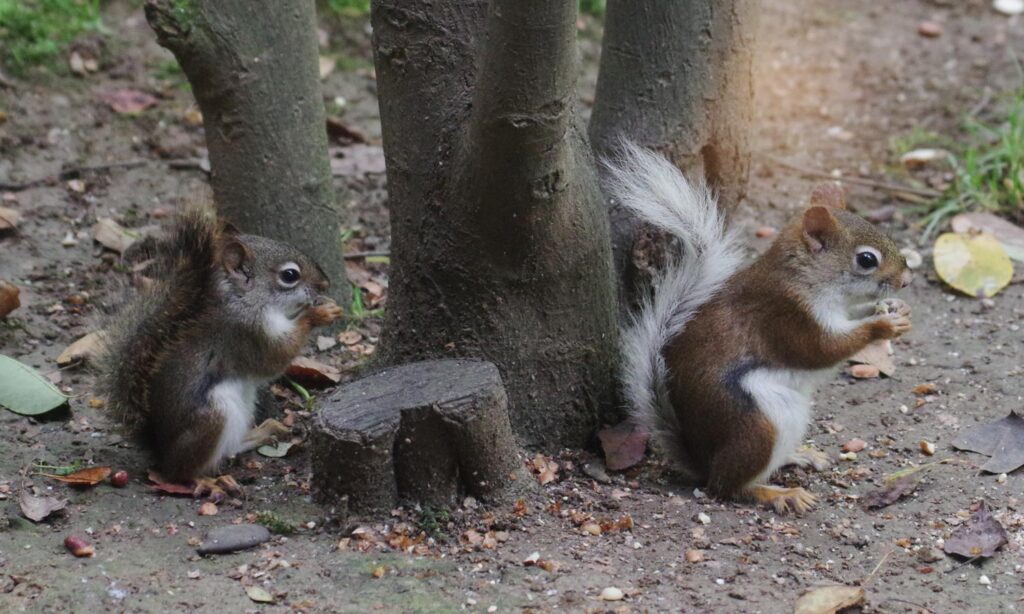
The white-tails have grown, and this one is nearly twice the size compared to the very young red squirrel on the left.
What was becoming questionable (that is, the dark spine) became highly noticeable a few days later.
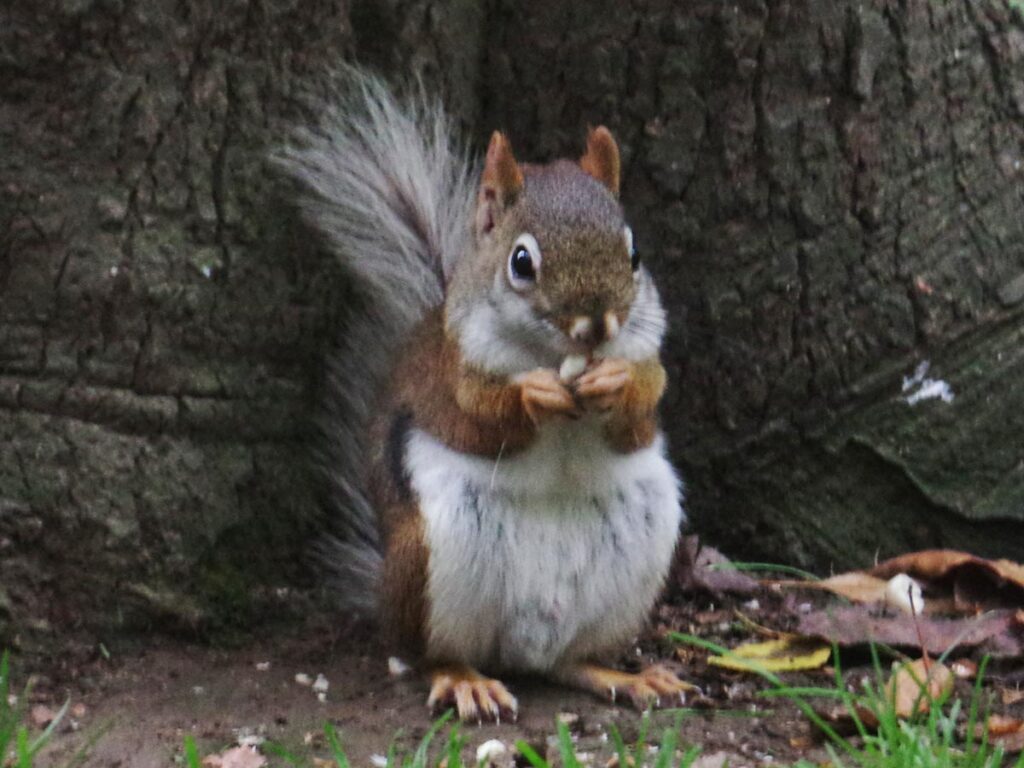
Above, not only the spine but the entire tail of the white-tail red appears darker.
The trend toward having a darker tail continued.
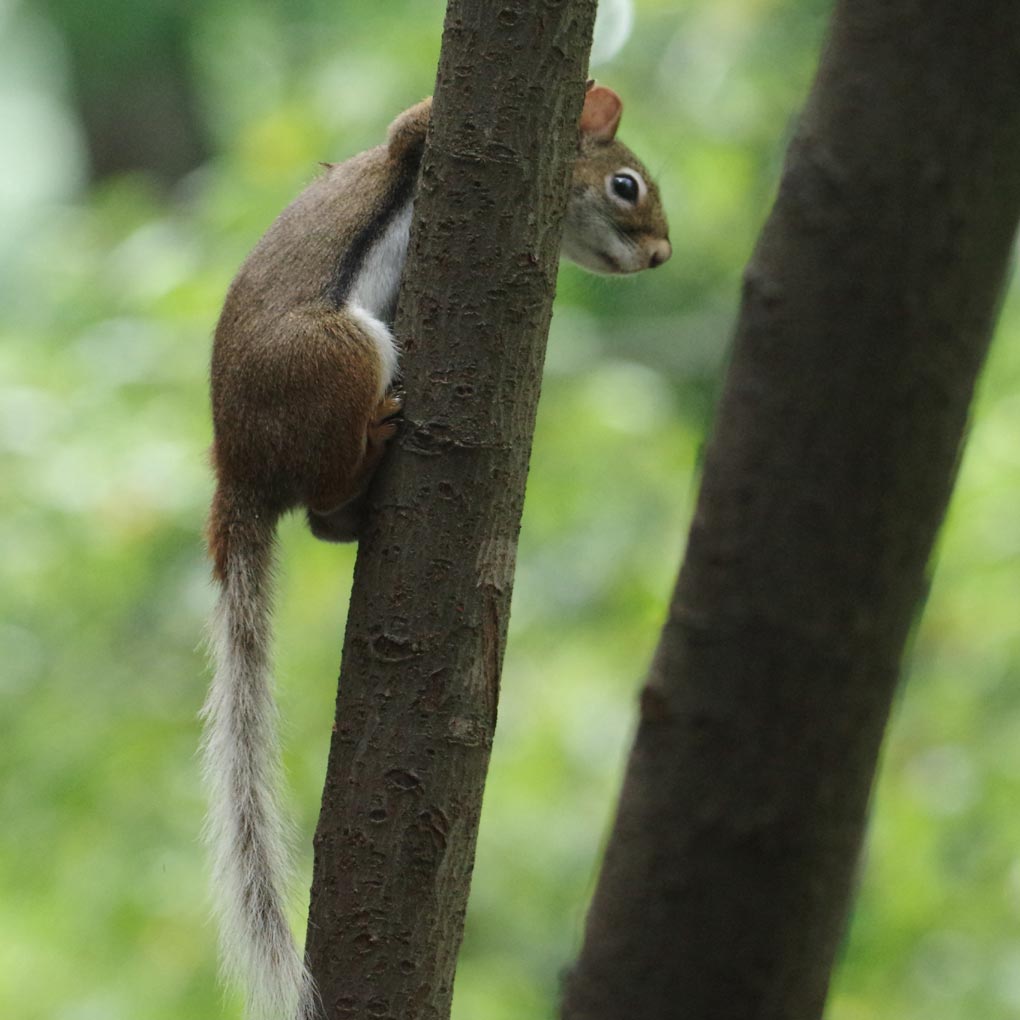
Four days later and I had no doubt that a new coat of fur was replacing the white tail of the white-tail red.
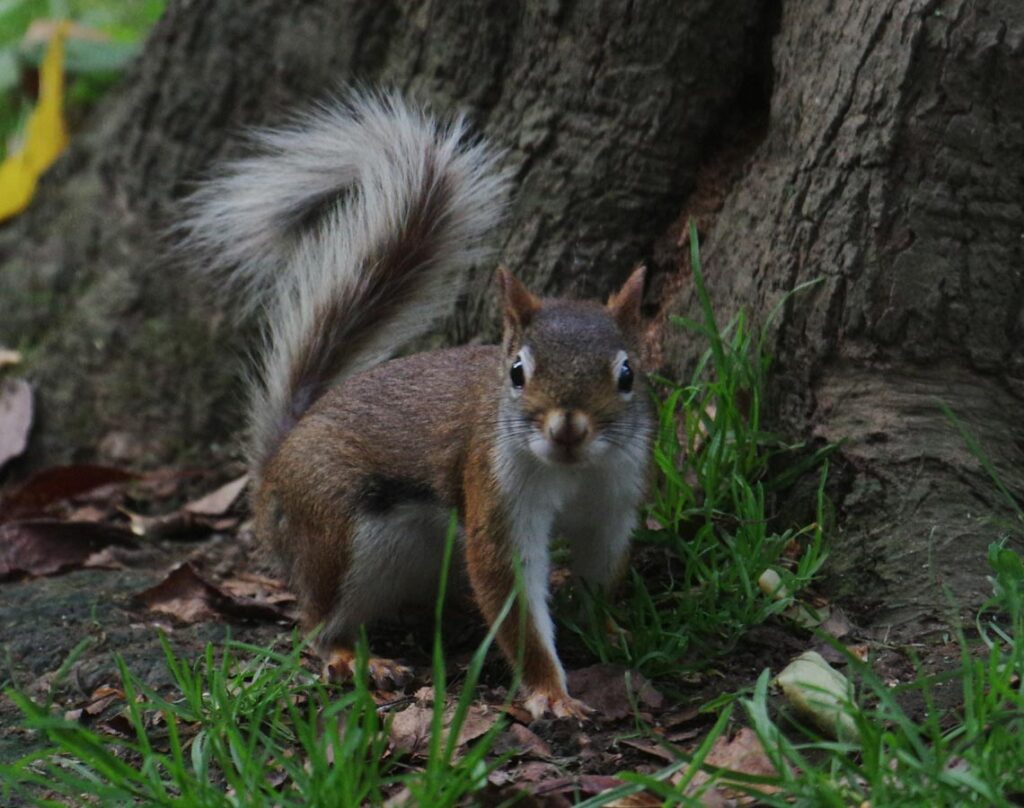
From that time, on August 10, the “white” tail continued to disappear. Four days later, there is only a fringe of white to the red’s tail.
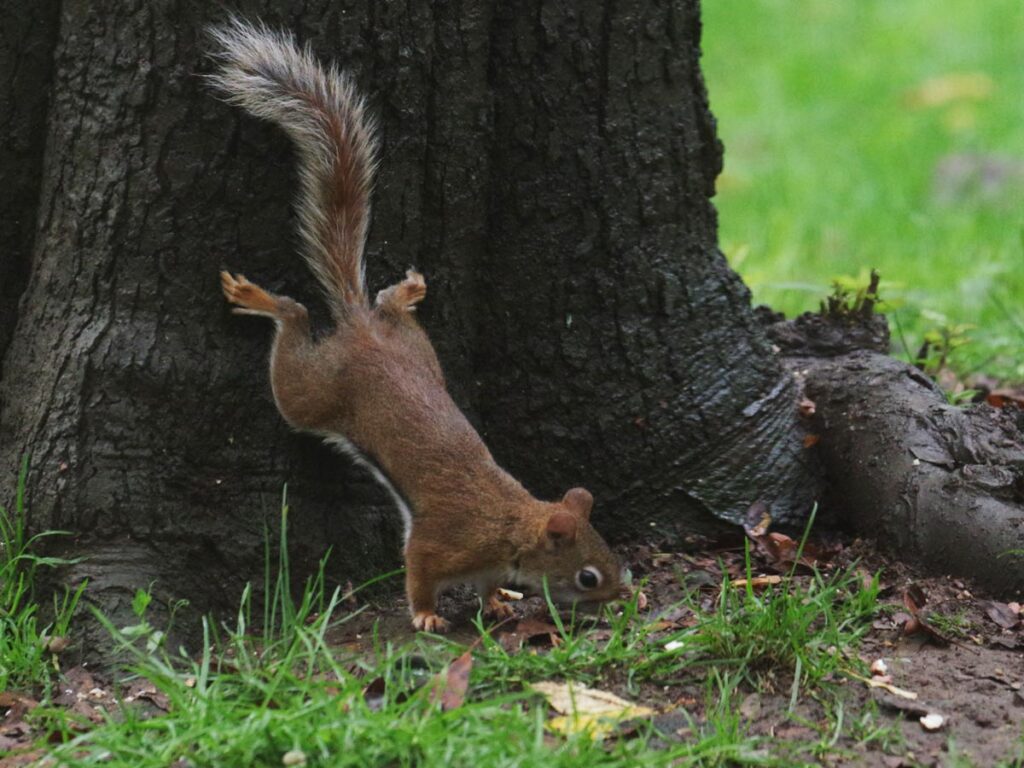
The challenge became to identify which reds originally had a white tail. Apart from the outskirts of the tail, the tip of a red squirrel’s tail is traditionally black, and black has not been reached in the next photo.
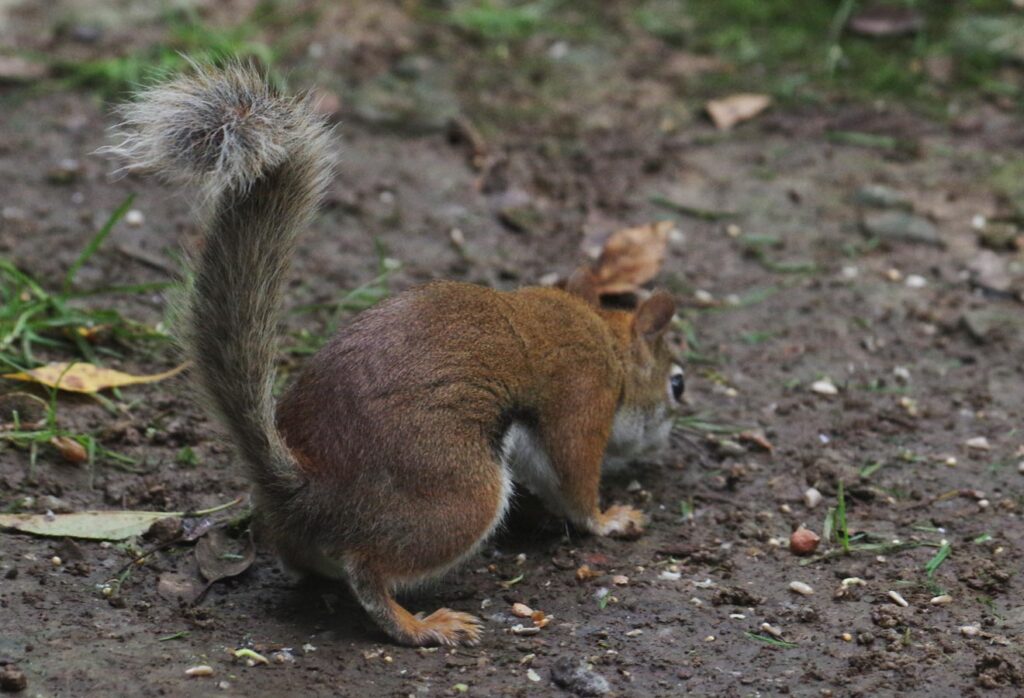
By August 26, there’s only the hint of a former white tail on the red squirrel.
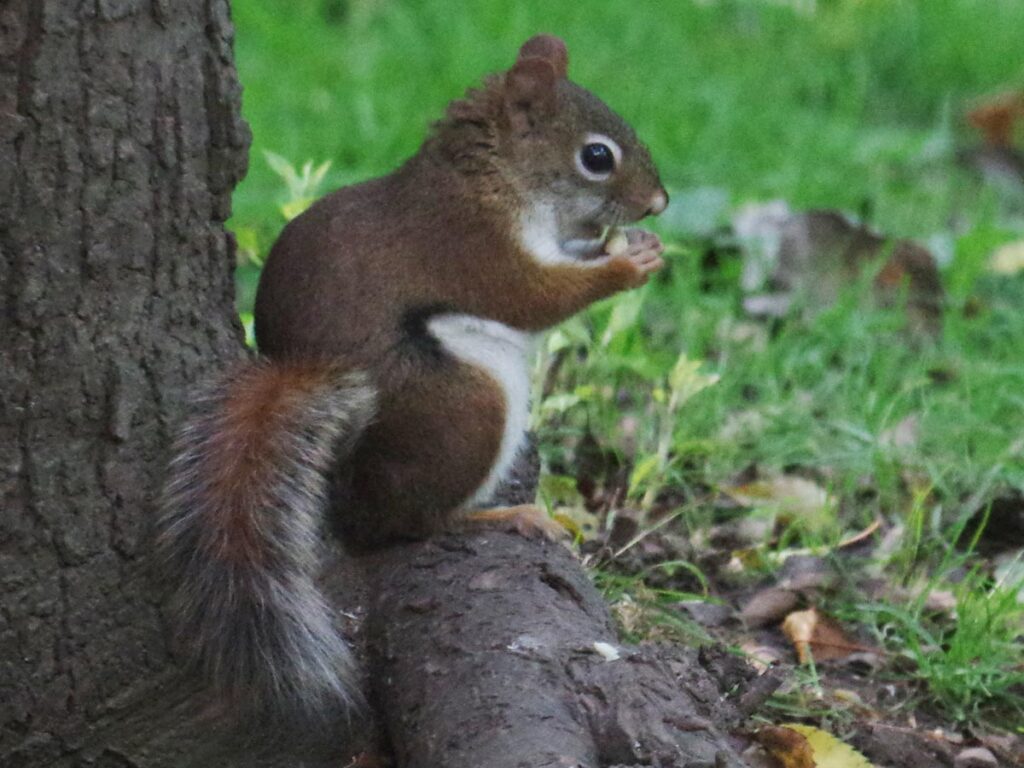
Two days later, on August 28, I can leave everyone with a photo and a question: Did this red squirrel ever have a white tail?
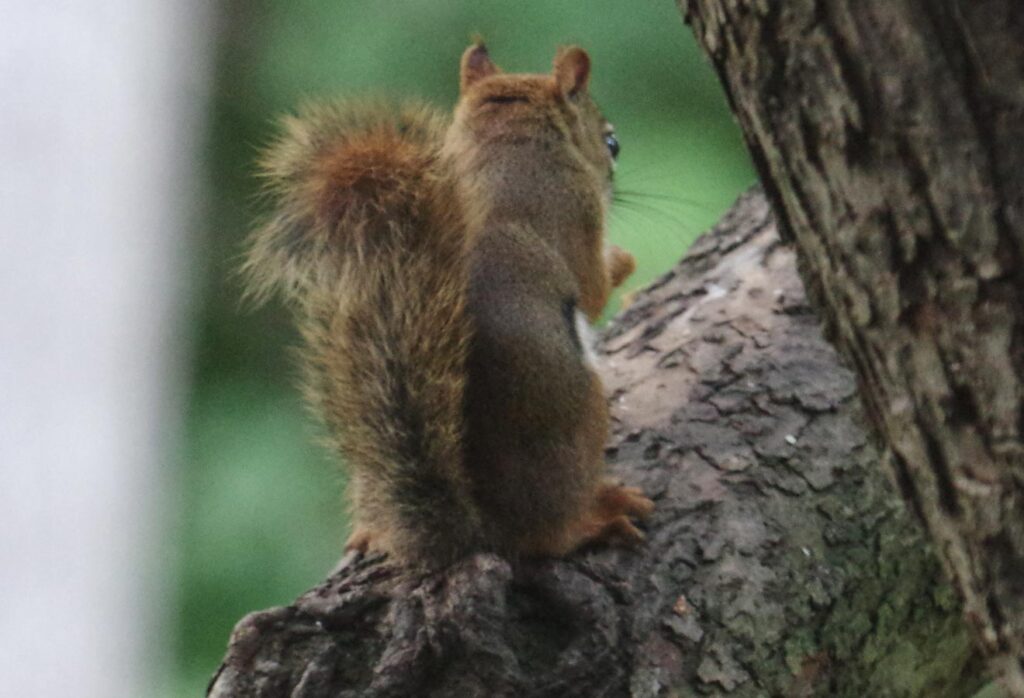
I would guess that the above red squirrel is one of the former white-tails. The tail tip is not quite black, but it isn’t that simple. While the white-tail reds were growing a new coat of fur, the other reds were also growing a new coat.
Where does one begin and the other end?
Whatever the answer, the white-tail reds enlivened the area for nearly two months. How much more can one ask?